Home/Services/4D Simulation

Service 04 · 4D Simulation

4D Simulation for tenders that must convince—and programmes that must work.

Vultris links the programme to the BIM model so bid teams, planners, project leaders and clients can see the proposed method, test the sequence and make decisions with a shared view of the work.

Discuss a tender or programme
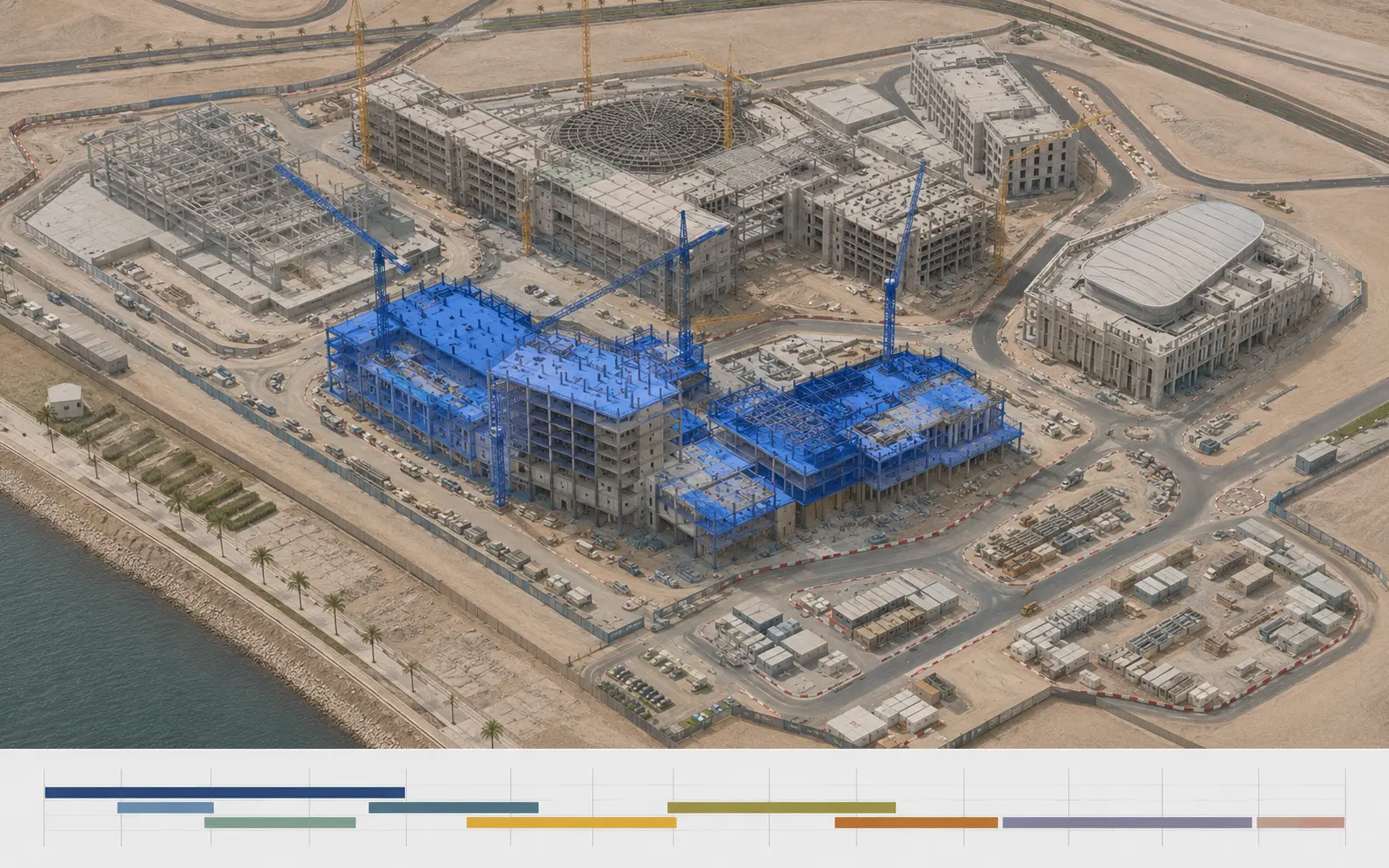
4D construction simulation showing programme stages and active work zones

The delivery problem

The programme may be logically linked and still fail to explain how the project will be built.

Vultris starts by checking the current information and responsibility structure. The proposal then focuses on outputs that remove or expose the actual constraint.

The tender submission includes dates and narrative, but the proposed method is difficult to assess.
The bid programme has not been checked against the available model, access or work areas.
Site gates, haul routes, laydown, lifting zones and temporary works compete with active construction.
A design or specialist package must be released in step with procurement and installation.
The baseline, look-ahead or recovery proposal needs to be understood by people who do not read planning software every day.
An existing animation looks polished but cannot answer the planning questions being asked.

How companies appoint us

Choose the 4D scope around the decision you need to make.

A tender animation, baseline review and recovery study are not the same service. The scope, level of detail and update cycle should match the buyer, deadline and decision.

Tender / bid

Tender 4D Simulation

Usually appointed by: Bid manager, planning manager or pre-construction director

The contractor or specialist bidder must explain a complex method, show control of logistics or distinguish its proposal before the tender return.

Typical scope: Bid-programme and model review, construction sequence, temporary works and logistics representation, review sessions, final animation and key stills for the written submission or interview.

Award / mobilisation

Baseline & Mobilisation Review

Usually appointed by: Project director, planning manager, developer or PMC

The proposed baseline must be tested against the physical project before teams, access routes and work fronts are committed.

Typical scope: Programme-to-model linking, site setup and logistics phases, work-area and handover review, decision log and agreed 4D sequence for mobilisation.

Construction

Construction 4D Support

Usually appointed by: Project controls, construction or package team

The team needs a clearer way to coordinate upcoming work, report progress or explain the effect of a change.

Typical scope: Rolling look-ahead simulations, critical-area studies, planned-versus-actual views, progress meeting material and updates tied to agreed status dates.

Delay / recovery

Recovery Option Simulation

Usually appointed by: Project director, planner, contractor, developer or PMC

Several recovery ideas exist, but their effect on access, work fronts, logistics and other trades is not clear.

Typical scope: Targeted option modelling, side-by-side sequence comparison, constraint record and decision-ready visuals. Delay analysis is separate unless expressly appointed.

High-risk package

Critical Sequence Review

Usually appointed by: Main contractor, specialist contractor or design consultancy

A concentrated package—such as complex structure, façade, plantroom, fit-out or themed works—has difficult interfaces or installation constraints.

Typical scope: Focused model preparation, package sequence, access and installation review, interface workshops and a concise output for tender or delivery coordination.

What we can deliver

The work behind a credible 4D Simulation.

The final animation is only one output. The value comes from preparing the model, checking the programme structure, representing the real constraints and reviewing the sequence with the people responsible for delivery.

01

Programme and model check

Review whether the activity structure, model breakdown and available information are suitable for the required 4D decision.

02

4D build plan

Agree the zones, work packages, temporary elements, logistics items, dates and review points that must be represented.

03

Programme-to-model linking

Connect programme activities to the correct model elements and locations at a useful level of detail.

04

Tender 4D Simulation

Explain the proposed methodology, sequence, logistics, temporary works, key milestones and package handovers in the bid.

05

Site logistics simulation

Test how gates, delivery routes, laydown, storage, lifting and changing work zones operate through the programme.

06

Critical sequence study

Focus on a difficult area or package such as structure, façade, plantrooms, specialist steel, fit-out or themed works.

07

Look-ahead and progress simulation

Show upcoming work fronts, prerequisites and planned-versus-actual status using an agreed update process.

08

Recovery option comparison

Compare alternative sequences or additional work fronts so the project team can see the operational effect before deciding.

What we need

Inputs to start properly.

  • Tender, baseline or recovery programme in a usable scheduling format
  • Latest available BIM models—even if they still require preparation
  • Method statement, phasing, logistics, temporary works and access information available at the current stage
  • Tender return date or project decision date, plus the audience and questions the simulation must answer

What changes

Practical outcomes.

  • A tender method that is easier to understand and defend
  • Earlier visibility of sequence, access and logistics conflicts
  • A shared visual basis for planning and coordination reviews
  • Clearer communication of baseline, progress, change and recovery

Is 4D worth commissioning?

Use it where visibility can change a bid or decision.

Not every project needs 4D. It earns its place when the physical sequence is difficult to explain, test or coordinate—and when the project team will use the findings.

Strong reasons to use it

  • The tender evaluation gives weight to methodology, logistics, programme or presentation.
  • The project is complex enough that work areas, access or temporary conditions change over time.
  • A decision-maker needs to understand the plan without interpreting a detailed scheduling file.
  • The team will review and act on issues revealed by the simulation.

When it adds little value

  • The only requirement is a generic animation with no planning question behind it.
  • The programme has no usable activity logic, dates or work-package structure and nobody is appointed to correct it.
  • The project is simple enough that drawings and a conventional programme already explain the sequence clearly.
  • There is no time or authority for the bid or project team to review assumptions before issue.

Common questions

Before you appoint the service.

Can you support a live tender with a fixed return date?

Yes, if the available programme, models and decision route are sufficient for the required scope. We first confirm what can be delivered credibly within the remaining tender period.

Do we need a perfect BIM model before starting?

No. Tender and early-stage models are often incomplete. We assess whether the existing geometry is usable, what must be prepared and which missing elements need simple temporary representation.

Do you prepare the construction programme?

We can review and help structure programme information for 4D use. Formal planning responsibility remains with the appointed planner or contractor unless programme development is expressly included in our scope.

Is 4D Simulation only a presentation video?

No. A video can support a bid or meeting, but the core service is checking the link between activities, model elements, work areas, access, logistics and temporary conditions.

Can 4D prove that a programme is achievable?

No simulation can guarantee delivery. It can expose physical and sequencing assumptions, improve communication and support review; programme feasibility still depends on durations, resources, productivity, procurement and other planning inputs.

Which programme and model formats do you accept?

We confirm this during the initial review. The practical requirement is usable schedule data, suitable model geometry and a clear way to identify activities, zones and work packages.

Dubai, UAE · GCC delivery

Have a live tender or programme decision?

Send the tender return or decision date, current programme, available BIM models and the sequence or planning problem you need to explain.

contact@vultris.com